A red, hot, painful breast, with or without fever, is hard to ignore. For a new mother who is already exhausted and sleep-deprived, it can feel like the last straw. For other women, it may appear out of nowhere, with no baby in sight, and then return again and again despite repeated courses of antibiotics.
Breast infections are common, treatable and, in most cases, easy to settle if they are caught early. They also have a few important quirks: some need drainage rather than just tablets, some are not infections at all, and a small number are mistaken for something more serious. This blog explains the whole picture.
What Is Mastitis?
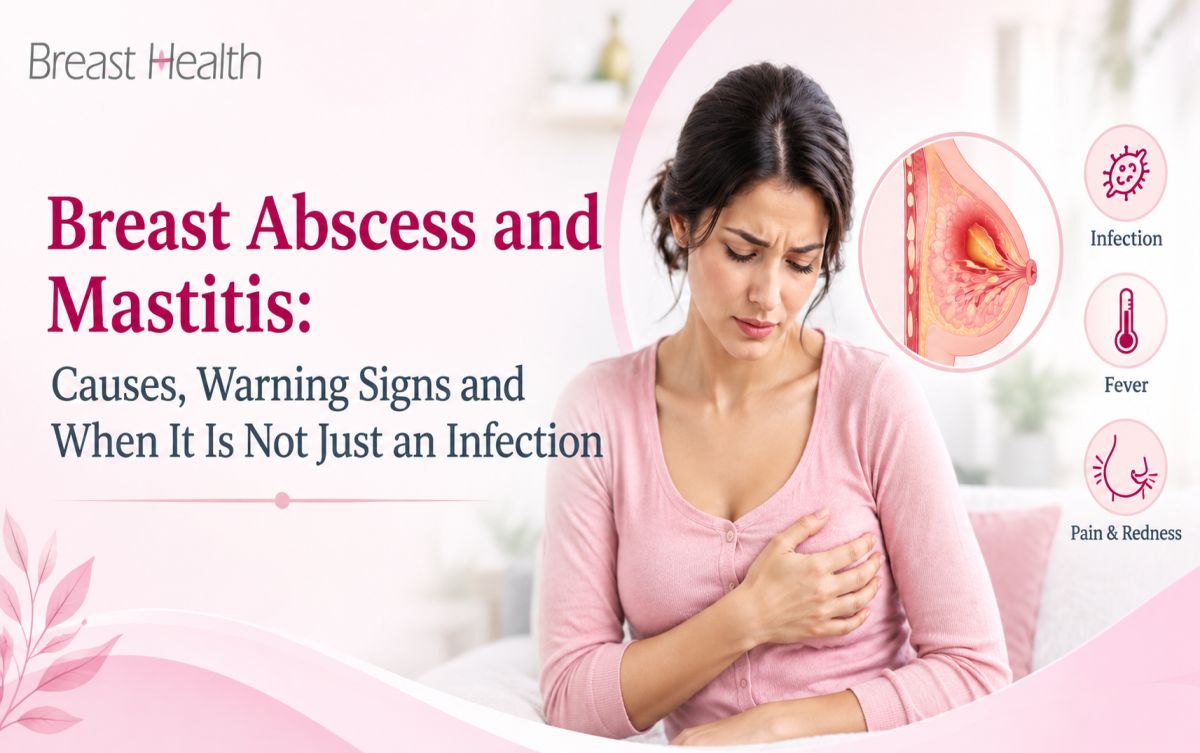
Mastitis is inflammation of breast tissue, which may or may not be caused by infection. It typically produces:
• A red, warm, swollen and tender area on the breast, often wedge-shaped
• Pain that may be sharp or throbbing
• Fever, chills, body aches and a flu-like feeling
• Sometimes a hard, tender lump in the affected area
What Is a Breast Abscess?
If mastitis is not treated or does not respond, a pocket of pus can form within the breast. This is a breast abscess. It usually feels like a painful, tense, fluctuant lump, with the skin above it red, shiny and very tender. Fever often persists despite antibiotics, and the lump may point towards the skin surface.
Two Main Types
1. Lactational (breastfeeding-related) mastitis and abscess.
This is the most common form, typically occurring in the first few weeks to months after delivery, though it can occur at any time during breastfeeding, including weaning. Common contributing factors include:
• Milk stasis, where milk is not drained efficiently, from missed feeds, a poor latch, engorgement or sudden weaning
• Cracked or damaged nipples, which let bacteria (most commonly Staphylococcus aureus) enter
• Tight bras or pressure on the breast
• Fatigue, stress and reduced immunity
2. Non-lactational mastitis and abscess. These occur in women who are not breastfeeding and tend to be more stubborn and more likely to recur. Risk factors include:
• Smoking (a strong and well-recognised factor)
• Diabetes or weakened immunity
• Nipple piercing
• Duct ectasia or inflammation of the ducts near the nipple (periductal mastitis)
• Previous breast infections or surgery
Is It Safe to Keep Breastfeeding?
This is the question mothers most often ask, and the answer is usually yes. Milk from an infected breast is safe for the baby, and continuing to feed or express actually helps resolve the problem by keeping the milk moving. Stopping suddenly can make things worse.
Several practical measures help:
• Feed or express frequently, starting on the affected side if comfortable, but do not over-pump, because that can increase milk production and worsen congestion
• Check the baby's latch. A lactation consultant can make a real difference
• Use gentle massage towards the nipple while feeding; avoid aggressive or deep massage, which can worsen inflammation
• Cold compresses after feeds and, if comfortable, warmth before feeds, to ease pain and swelling
• A well-fitting, supportive but not tight bra
• Pain relief as advised by your doctor
• Rest, fluids and nutrition
Most commonly prescribed antibiotics are compatible with breastfeeding, but always use the antibiotic and dose prescribed by your doctor rather than self-medicating.
How Is It Diagnosed?
Mastitis is mainly a clinical diagnosis: your doctor will examine you and check for fever, tenderness, redness and swelling. Where a collection is suspected, a breast ultrasound is the key test. It shows whether there is a fluid pocket (abscess) or only inflamed tissue, and it guides treatment. It is safe in breastfeeding women.
Treatment Of Breast Abscess
Early mastitis usually responds to a combination of frequent milk removal, supportive measures and a course of appropriate antibiotics. Improvement is expected within about 48 to 72 hours. If there is no improvement within this time, it is a sign that the diagnosis should be reviewed.
Breast abscess needs drainage in addition to antibiotics. The modern approach has changed considerably:
• Ultrasound-guided needle aspiration: the pus is drawn off with a needle, often repeated every few days if required, and is the preferred first approach for most small to moderate abscesses. It avoids a surgical cut, leaves minimal scarring and allows breastfeeding to continue.
• Catheter drainage for larger collections.
• Incision and drainage under anaesthesia is reserved for large, multi-chambered or complicated abscesses, or those that do not respond to aspiration.
In every case, the pus may be sent to the laboratory for culture, particularly if the abscess is recurrent, to choose the right antibiotic and to look for unusual causes.
When It Is Not Just an Infection
This is the part that is easy to miss and the reason I always encourage patients not to treat a persistent "infection" at home. Several conditions can mimic mastitis or an abscess:
• Inflammatory breast cancer is a rare, aggressive cancer that can make the breast red, warm, swollen and tender, often without a clear lump. The key difference is that it does not improve with antibiotics, and it can progress quickly.
• Granulomatous (idiopathic) mastitis is a benign but troublesome inflammatory condition that causes recurrent lumps, abscesses and sinuses, and often needs a biopsy to diagnose.
• Breast tuberculosis, which can present with an abscess or discharging sinus and is more common in India than many people realise.
• Duct ectasia and periductal inflammation, causing recurrent infection near the nipple.
A good rule of thumb is: if a "breast infection" does not settle within a week of appropriate treatment, recurs in the same place, or if you are not breastfeeding and there is no clear cause, it needs further evaluation, usually including imaging and a biopsy. A biopsy at this stage is not a sign of bad news. It is a sign of careful medicine.
Red Flags: When to See a Doctor Urgently
• Fever with a red, painful, swollen breast
• A tense, painful lump that is getting bigger
• Pus or foul-smelling discharge
• Skin changes such as dimpling, thickening or an orange-peel texture
• Symptoms that do not improve within 48 to 72 hours of treatment
• A recurring "infection" in the same area
• Feeling very unwell, with rapid heartbeat, shivering or confusion
Prevention Tips for Breastfeeding Mothers
• Ensure a good latch from the beginning. Ask for help early
• Feed on demand and avoid long gaps between feeds
• Wean gradually rather than abruptly
• Treat nipple cracks early with proper positioning and nipple care advice
• Avoid tight underwire bras and sleeping on your stomach with pressure on the breast
• Rest as much as you can, however difficult it feels
Prevention for Non-Breastfeeding Women
• Stop smoking, because it is one of the strongest modifiable risk factors for recurrent breast abscess
• Keep diabetes well controlled
• Treat nipple inversion or duct problems if they cause repeated infections
• Seek early treatment for a red or tender area rather than waiting
A breast infection is painful and frightening, but it is usually quite treatable, especially when you act early. The most important thing is not to wait it out for days while the pain builds, and not to accept repeated antibiotic courses for a problem that keeps returning without a thorough check.
Dr. Rohan Khandelwal treats breast infections and abscesses, including ultrasound-guided drainage, at CK Birla Hospital for Women, Block J, Mayfield Garden, Sector 51, Gurugram. Call 0124 488 2200 or +91 79882 52759 to book a consultation.
This article is for general information and does not replace a personal medical consultation.
Frequently Asked Questions
Small areas of inflammation sometimes settle, but a true abscess usually needs drainage. Delaying treatment risks larger collections and a more extensive scar.
Not necessarily. Many abscesses are treated with ultrasound-guided aspiration without surgery.
Generally no. Most women continue to breastfeed, from the same breast if comfortable, even during treatment.
Recurrence usually has an underlying reason, such as smoking, duct problems, incompletely drained pus or an unusual condition like granulomatous mastitis, which is why recurrent cases deserve full evaluation.
Ordinary infection does not. This is why persistent or unusual cases are examined carefully to exclude other conditions.