When a patient is told her breast cancer is "HER2-positive," the first reaction is usually fear, followed quickly by a flood of questions. What does HER2 mean? Is it more aggressive? Does it need chemotherapy, or is there something more specific available? The good news is that HER2-positive breast cancer is one of the biggest success stories in modern oncology, thanks to the development of targeted therapies. Here is what patients in Gurugram, Delhi NCR, and across India should understand about this breast cancer treatment.
What Is HER2, and Why Does It Matter?
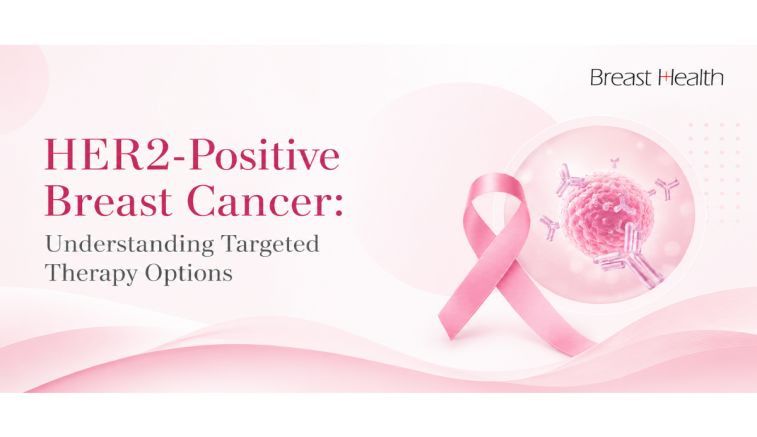
HER2 (Human Epidermal growth factor Receptor 2) is a protein found on the surface of breast cells that helps control cell growth. In about 15 to 20 percent of breast cancers, tumor cells have too many copies of the HER2 gene, causing them to produce excess HER2 protein. This drives the cancer cells to grow and divide faster than normal.
Historically, HER2-positive cancers were considered more aggressive and harder to treat. That changed with the development of HER2-targeted drugs, which specifically block this protein and have transformed outcomes for this subtype.
How Is HER2 Status Tested?
HER2 status is determined through tests performed on the biopsy or surgical tissue sample:
✔ IHC (Immunohistochemistry): A preliminary test that scores HER2 protein expression from 0 to 3+
✔ FISH (Fluorescence In Situ Hybridization): Used to confirm HER2 gene amplification, particularly when IHC results are borderline (2+)
Getting an accurate HER2 result is critical, since it directly determines whether targeted therapy will be part of the treatment plan.
Targeted Therapy Options for HER2-Positive Breast Cancer
Unlike traditional chemotherapy, which affects all rapidly dividing cells, targeted therapy is designed to specifically attack HER2-driven cancer cells while sparing healthy tissue as much as possible. Common approaches include:
✔ Monoclonal antibodies that bind to the HER2 protein and block its growth signal
✔ Antibody-drug conjugates that deliver chemotherapy directly to HER2-positive cells
✔ Tyrosine kinase inhibitors that work inside the cell to block HER2 signaling
✔ Combination protocols pairing targeted therapy with chemotherapy, particularly in the neoadjuvant (pre-surgery) setting
The specific combination and duration of targeted therapy depend on tumor size, lymph node involvement, and whether treatment is being given before or after surgery.
Does HER2-Positive Mean More Aggressive Treatment?
It often means more structured treatment, not necessarily a worse prognosis. In fact, with the right combination of targeted therapy, chemotherapy, and surgery, HER2-positive breast cancer today has some of the most favorable long-term outcomes among all breast cancer subtypes, particularly when caught at an early stage.
What About Surgery and Follow-Up?
Targeted therapy does not replace surgery. Most patients will still require breast conservation surgery or mastectomy, often combined with sentinel lymph node biopsy to check for spread. Targeted therapy may continue for several months to a year after surgery to reduce the risk of recurrence, along with regular follow-up scans and clinical examinations.
Getting the Right Guidance
A HER2-positive diagnosis comes with a lot of technical terminology, and it is completely normal to feel overwhelmed. What matters most is discussing your specific IHC and FISH results with your breast cancer specialist, understanding the treatment sequence recommended for your stage, and following through with the full targeted therapy course, since stopping early can affect outcomes.
About Dr. Rohan Khandelwal
Dr. Rohan Khandelwal is a Fellowship-trained Breast Cancer Surgeon from the University of Maryland, USA, currently serving as Principal Consultant, Breast Cancer Surgery, at CK Birla Hospital for Women, Gurugram. He has extensive experience managing HER2-positive breast cancer through a coordinated, multidisciplinary approach that combines targeted therapy, surgery, and close follow-up care tailored to each patient's biology.
Book a consultation with Dr. Rohan Khandelwal to understand your HER2 status and the right treatment path forward. Serving patients across Gurugram, Delhi NCR, Noida, and Faridabad.
Frequently Asked Questions
Is HER2-positive breast cancer more dangerous than HER2-negative?
Not necessarily. While HER2-positive cancers were historically considered more aggressive, the development of targeted therapy has made outcomes for this subtype among the most favorable in breast cancer today, especially with early diagnosis.
How long does targeted therapy last?
Duration varies, but targeted therapy is often continued for up to a year, sometimes starting before surgery and continuing afterward, depending on the specific drug protocol recommended by your oncology team.
Can HER2-positive breast cancer also be hormone-receptor positive?
Yes. Some tumors are both HER2-positive and hormone-receptor positive, in which case treatment may combine targeted therapy with hormone therapy in addition to chemotherapy and surgery.
Does targeted therapy replace the need for surgery?
No. Targeted therapy works alongside surgery, not instead of it. Most patients still require breast conservation surgery or mastectomy, along with sentinel lymph node biopsy as needed.