The understanding and management of Breast Cancer has evolved significantly over the past decade, with modern oncology focusing on early diagnosis, evidence based treatment planning, minimally invasive surgery and improved long term survival outcomes. Breast cancer care has now become much more structured, precise and patient centred with growing awareness and advancements in medical technology.
Despite increased awareness, delayed diagnosis remains one of the biggest challenges in breast oncology. Many individuals cloud their judgment with misinformation, ignoring symptoms or postponing screening. According to a lot of leading experts, early diagnosis remains one of the strongest predictors of successful treatment outcomes.
As a recognised Breast Cancer Specialist in India, Dr. Rohan Khandelwal emphasises the importance of timely consultation, accurate diagnosis and multidisciplinary treatment planning in achieving better clinical outcomes.
Understanding Breast Cancer and Its Clinical Behaviour
Breast cancer develops when abnormal cells within the breast tissue multiply uncontrollably and gradually form a tumour. In some cases, the disease remains confined to the breast, while in others it may spread to lymph nodes or distant organs if left untreated.
There are multiple tumour subtypes and each behaves differently depending on its biological characteristics. The commonly diagnosed forms include:
✔ Ductal carcinoma
✔ Lobular carcinoma
✔ HER-2 positive breast cancer
✔ Triple negative breast cancer
✔ Hormone receptor positive breast cancer
✔ Inflammatory breast cancer
The biological nature of the tumour often determines treatment strategy, recurrence risk and long term prognosis.
Early Symptoms that Require Specialist Evaluation
The earliest signs of breast cancer are not always painful or dramatic. In many patients, the symptoms may appear subtle initially, which is why regular breast awareness and timely screening are essential.
Some important symptoms include:
✔ A persistent lump
✔ Thickening within breast tissue
✔ Changes in breast shape or size
✔ Skin dimpling or puckering
✔ Nipple inversion
✔ Unusual nipple discharge
✔ Swelling in the underarm region
✔ Persistent redness over the breast
Although many breast lumps are benign, every unexplained breast change should undergo clinical evaluation. Dr. Rohan, a Breast Cancer Specialist In Gurugram can help in conducting accurate diagnosis and appropriate treatment sequencing when early symptoms are addressed.
Understanding the Causes and Risk Factors
The exact Causes Of Breast Cancer are multifactorial and may differ between individuals. Breast cancer often develops due to a combination of lifestyle, genetic, hormonal and environmental influences.
Several recognised risk factors include:
| Risk Factor | Clinical Impact |
| Family history | Genetic predisposition increases susceptibility |
| Obesity | Particularly relevant after menopause |
| Hormonal imbalance | Long term hormonal exposure may contribute |
| Alcohol consumption | Associated with elevated cancer risk |
| Sedentary lifestyle | Reduced physical activity affects overall health |
| Previous radiation exposure | Prior chest radiation increases future risk |
| Delayed childbirth | Certain reproductive factors may influence risk |
It is important to understand that breast cancer may also occur in individuals without obvious risk factors, which is why regular screening remains crucial.
Importance of Specialist Led Breast Care
Breast oncology requires precise clinical judgement, advanced diagnostic interpretation and multidisciplinary treatment planning. Early consultation with a Breast Cancer Specialist In Gurugram helps ensure accurate diagnosis and appropriate treatment sequencing.
Specialist led care allows:
✔ Faster clinical evaluation
✔ Accurate radiological interpretation
✔ Timely biopsy planning
✔ Better surgical decision making
✔ Access to advanced therapies
✔ Coordinated multidisciplinary management
Modern breast oncology increasingly focuses on preserving both oncological safety and cosmetic outcomes wherever clinically feasible.
Understanding the Breast Cancer Diagnosis Procedure
The modern breast cancer diagnosis procedure involves multiple carefully coordinated steps that help determine tumour type, disease extent and treatment strategy.
Clinical Examination
A detailed physical examination helps specialists assess breast abnormalities, skin changes, nipple findings and lymph node involvement.
Imaging Investigations
Diagnostic imaging plays a central role in identifying suspicious lesions and guiding treatment planning.
Common imaging modalities include:
✔ Mammography
✔ Breast ultrasound
✔ MRI breast imaging
✔ Digital breast tomosynthesis
Core Needle Biopsy
A biopsy remains the definitive diagnostic method for confirming breast cancer. Tissue samples are analysed to determine:
✔ Tumour subtype
✔ Hormone receptor status
✔ HER2 status
✔ Tumour aggressiveness
Additional Investigations
In selected cases, additional investigations may include:
✔ PET-CT scans
✔ CT imaging
✔ Bone scans
✔ Blood investigations
Accurate diagnosis forms the foundation of effective treatment planning and long term disease control.
Importance of Early Detection in Breast Oncology
Early stage breast cancer is generally associated with:
✔ Better survival rates
✔ Less aggressive treatment
✔ Greater breast conservation possibilities
✔ Reduced recurrence risk
✔ Faster post treatment recovery
This is why routine screening programmes remain highly important, especially for women above recommended screening age or those with significant family history.
Some commonly advised screening measures include:
✔ Annual mammography
✔ Clinical breast examinations
✔ Breast self awareness
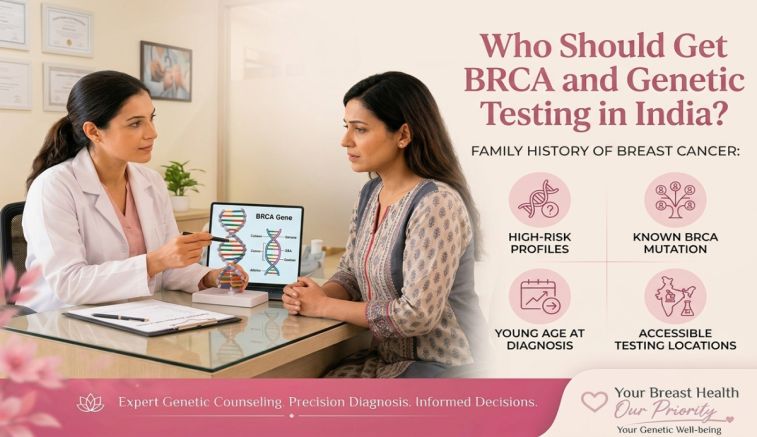
✔ Genetic counselling in high risk individuals
Early diagnosis continues to remain one of the strongest tools in reducing breast cancer mortality worldwide.
Understanding Modern Staging Systems
The Staging of Breast Cancer can actually help in determining how far the disease has progressed and guides treatment recommendations.
| Stage | Disease Extent | Common Treatment Direction |
| Stage 0 | Non invasive disease | Surgery with surveillance |
| Stage 1 | Small localised tumour | Surgery with possible adjuvant therapy |
| Stage 2 | Larger tumour or limited node involvement | Combination treatment |
| Stage 3 | Locally advanced disease | Multimodality therapy |
| Stage 4 | Metastatic spread | Systemic disease management |
Staging helps specialists in individualising the treatment according to tumour behaviour and burden of the disease.
Surgical Approaches in Modern Breast Cancer Care
Surgery remains one of the most important treatment modalities and the advancements that have happened in surgical techniques around the decade allow many patients to achieve effective cancer clearance while preserving breast appearance whenever possible.
Common surgical procedures include:
✔ Breast conserving surgery
✔ Lumpectomy
✔ Mastectomy
✔ Sentinel lymph node biopsy
✔ Axillary node surgery
✔ Oncoplastic reconstruction
The surgical approach depends upon:
✔ Tumour size
✔ Tumour location
✔ Disease stage
✔ Breast size
✔ Biological subtype
✔ Patient preference
Dr. Khandelwal, regarded as a top breast cancer surgeon in Gurugram, has provided personalised consultation to numerous patients over the years to ensure treatment combines oncological precision with optimal cosmetic and functional outcomes.
Role of Chemotherapy and Targeted Therapies
Chemotherapy remains an important component of treatment for many breast cancer subtypes. Depending on tumour biology and disease stage, chemotherapy may be administered:
✔ Before surgery
✔ After surgery
✔ In advanced disease settings
✔ Alongside targeted therapy
Modern oncology increasingly relies on tumour specific targeted therapies designed to block molecular pathways responsible for cancer progression.
Targeted treatment options have significantly improved outcomes in selected breast cancer subtypes, particularly HER2 positive disease.
Radiation Therapy in Breast Cancer Treatment
Radiation therapy helps reduce the risk of recurrence after surgery and plays an essential role in breast conserving treatment strategies.
Radiation may be recommended:
✔ After lumpectomy
✔ Following mastectomy in selected cases
✔ For lymph node involvement
✔ In locally advanced disease
Advancements in radiation delivery techniques now allow more precise treatment while minimising exposure to surrounding healthy tissues.
Hormonal Therapy and Long Term Disease Control
Hormone receptor positive breast cancer lump represents a significant proportion of all diagnosed cases. These tumours generally depend on naturally occurring hormones, primarily oestrogen and progesterone, to fuel their growth. When these receptors are identified on tumour cells, endocrine therapy becomes one of the most effective and well established treatment strategies.
How It Works
Unlike chemotherapy, hormonal therapy does not directly destroy cancer cells. Instead, it interrupts the hormonal signals that drive tumour growth. Depending on the approach, certain medications block oestrogen receptors on cancer cells, while others reduce oestrogen production within the body. Commonly used options include Tamoxifen for premenopausal women and aromatase inhibitors such as anastrozole or letrozole for postmenopausal patients.
Treatment Duration
A distinguishing feature of endocrine therapy is its extended duration. Treatment may continue for five to ten years depending on tumour stage, receptor sensitivity, recurrence risk and individual patient tolerance. Extended hormonal therapy has been shown to meaningfully reduce the risk of late recurrence, which can occur years after initial treatment completion.
Managing Side Effects
Because treatment continues over a prolonged period, side effect management becomes an important part of care. Commonly reported concerns include hot flushes, joint discomfort, fatigue, mood changes and reduced bone density. Any side effects significantly affecting quality of life should be discussed with the treating specialist promptly.
Ongoing Monitoring
Regular follow up throughout hormonal therapy allows specialists to evaluate treatment tolerance, monitor disease control and detect any early signs of recurrence. Periodic imaging, bone density assessments and clinical examinations form an essential part of structured long term care.
Patient education and adherence remain critical factors in ensuring hormonal therapy delivers its full long term benefit.
Importance of Personalised Treatment Planning
Two cancer cases can’t be of identical nature hence, modern oncology heavily focuses on coming up with personalised treatment strategies developed according to tumour biology and patient specific clinical factors.
A multidisciplinary breast oncology team evaluates:
✔ Tumour subtype
✔ Hormone receptor profile
✔ HER2 status
✔ Lymph node involvement
✔ Overall health condition
✔ Menopausal status
✔ Genetic predisposition
Recovery and Follow Up After Treatment
Depending on the disease stage, treatment intensity and surgical intervention the recovery can vary post cancer treatments as these factors have a reasonable impact on the recovery process. Dr. Rohan Khandelwal, a Breast Cancer Specialist In Gurugram, provides patient specific post treatment plans based on their case trajectory.
Post treatment follow up may include:
✔ Routine imaging surveillance
✔ Clinical examinations
✔ Monitoring for recurrence
✔ Rehabilitation support
✔ Lymphoedema management
✔ Nutritional guidance
Regular follow ups remain quite essential for maintaining long term health and identifying any treatment related complications early.
The Growing Importance of Breast Cancer Prevention
Proactive health measures may help reduce overall risk and support earlier detection even though not all breast cancers can be prevented. Effective Breast Cancer Prevention strategies involve a combination of regular screening practices and healthy lifestyle.
Some commonly recommended preventive measures include:
✔ Maintaining healthy body weight
✔ Regular physical activity
✔ Limiting alcohol intake
✔ Timely mammography screening
✔ Avoiding tobacco exposure
✔ Managing hormonal risk factors
✔ Seeking genetic counselling when indicated
Preventive awareness and timely medical evaluation remain essential components of long term breast health.
Advanced Breast Cancer Care with Specialised Expertise
Breast oncology has continued to evolve through technological innovation, improved diagnostics, precision medicine and multidisciplinary collaboration. Patients who consider Breast Cancer Treatment In NCR increasingly seek Dr. Khandewal who provide structured care supported by advanced surgical and oncological expertise.
Comprehensive breast cancer management today extends beyond tumour removal alone. The main focus lies on accurate diagnosis, personalised treatment pathways, evidence based therapies, long term surveillance and improved quality of life after treatment.
With growing awareness, improved screening accessibility and specialised oncological care, breast cancer outcomes continue to improve significantly when diagnosis and treatment occur at the appropriate stage.
Frequently Asked Questions
Early signs may include a breast lump, skin dimpling, nipple inversion, unusual nipple discharge, swelling in the underarm region, or changes in breast shape and size. A specialist should evaluate any persistent breast change.
No, many breast lumps are benign conditions, such as fibroadenoma or cysts. However, every unexplained lump requires proper clinical examination and imaging to rule out malignancy.
Diagnosis usually involves clinical examination, mammography, breast ultrasound, MRI in selected cases and a biopsy to confirm the tumour type and its biological characteristics.
Yes, early stage breast cancer generally has significantly better treatment outcomes. Early diagnosis often allows less aggressive treatment and improves long term survival rates.
Screening recommendations may vary depending on age, family history and individual risk factors. Women above the recommended screening age should undergo regular mammography and routine clinical breast evaluations as advised by their specialist.